Destinations in East Africa
East Africa contains some of the most ecologically productive wildlife habitats on earth. Each park and reserve represents an interplay between landscape structure, hydrology, rainfall patterns, and wildlife density. The summaries below outline the distinct functional character of each ecosystem and the type of safari experience travellers can expect.
Serengeti National Park
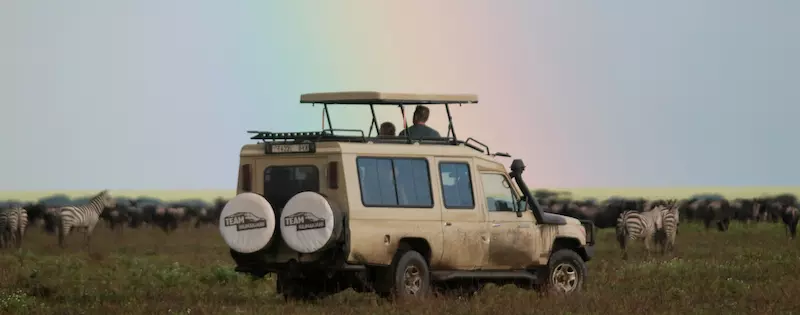
A vast, intact grassland system and the core driver of the Great Migration. The Serengeti’s open plains allow unusually clear visibility across long distances, which in turn favours high densities of large predators - particularly lion and cheetah. Resident wildlife remains strong year-round, while the location of migrating herds varies month-by-month in relation to rainfall, grazing, and calving cycles. The scale of the ecosystem ensures consistent sightings even during transitional seasons.
Ngorongoro Crater
A collapsed volcanic caldera containing a highly concentrated population of grazers and predators in a self-contained basin. The crater floor provides short, intensive game viewing with minimal travel time between sightings. Notable for black rhino, large bull elephants, and dense hyena and lion populations. Visibility is high, and the diversity of habitats - marsh, lake, grassland, forested edge - supports a broad range of species within a compact area.
Tarangire National Park
A dry-season refuge with one of the largest elephant populations in northern Tanzania. The Tarangire River functions as the park’s central artery, drawing wildlife from a broad catchment during June-October. The area is characterised by ancient baobabs, mixed woodland, and sandy riverbeds. Tarangire supports strong densities of buffalo, lion, leopard, and migrant ungulates, especially when water elsewhere has evaporated. Outside the dry season, dispersal increases but core game remains.
Lake Manyara National Park
A groundwater forest ecosystem fed by subterranean springs emerging at the base of the Rift Valley escarpment. Known for close-range elephant behaviour, tree-climbing lions, and large flocks of flamingos (season-dependent). The park is compact but ecologically diverse: evergreen forest, marsh, alkaline lake, and acacia woodland. Excellent for photography that benefits from proximity and filtered forest light.
Oldonyo Lengai & Lake Natron
A stark, other-worldly landscape defined by volcanic geology and extreme aridity. Oldonyo Lengai - the only active carbonatite volcano on earth - rises above a desert basin feeding into Lake Natron, an alkaline lake vital for East Africa’s flamingo breeding cycle. Wildlife densities are low, but the region offers unmatched geological drama, Maasai cultural insight, and specialised species adapted to desert margins. Best approached as a landscape and cultural experience rather than a traditional game-viewing destination.
Lake Eyasi & The Hadzabe Bushmen
A semi-arid basin inhabited by the Hadzabe, one of the last remaining hunter-gatherer peoples on the continent. The attraction here is anthropological rather than wildlife-focused: visitors can observe traditional bow-hunting techniques, fire-making, foraging, and tracking skills that have survived into the modern era. The lake itself varies dramatically with rainfall and supports seasonal birdlife. This area pairs well with safaris seeking cultural depth alongside ecological exploration.
Arusha National Park
A compact but varied park on the slopes of Mount Meru. Its habitats include montane forest, crater lakes, open glades, and the dramatic Ngurdoto Crater. Strong for birding - particularly waterfowl and forest species - and one of the best areas in Tanzania for guided walking due to the absence of large predators in certain zones. Views of Mount Meru and, on clear days, Kilimanjaro provide a striking backdrop.